What happened to the Illuminati after 1785? The documented Bavarian organization lost its ability to operate after government prohibitions, investigations, the exposure of internal documents and the departure of its founder, Adam Weishaupt. Its traceable organizational structure collapsed, although its name, ideas and reputation continued to spread.
Some former members may have remained in contact or participated in other intellectual and fraternal networks. However, personal relationships and shared ideas do not prove that the original Illuminati continued as one uninterrupted organization with the same leadership, ranks and membership system.
The suppression created a lasting historical mystery. Political writers, religious critics and later conspiracy authors used the disappearance of the organization to argue that it had survived secretly, moved to another country or entered other societies. These claims must be separated from what surviving records can demonstrate.
This guide examines what became of Adam Weishaupt and other members, whether the original order survived, how later survival theories developed and why the Illuminati became more influential as a legend after its documented organization collapsed.
For the earlier history, explore the complete Illuminati history guide and the documented founding of the Bavarian Illuminati in 1776.
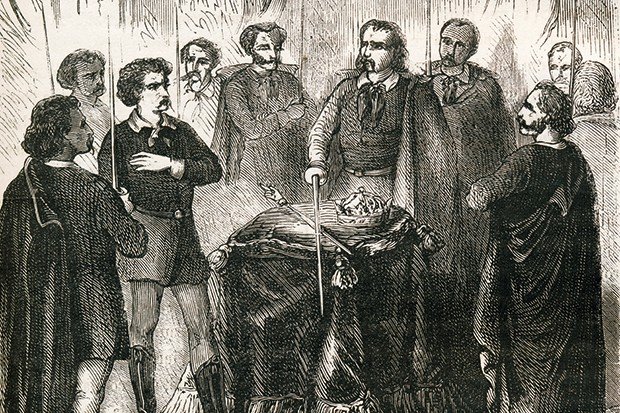
Why Is 1785 Important in Illuminati History?
The year 1785 is important because it represents the effective end of the Bavarian Illuminati as an openly traceable historical organization. Although the Order had operated privately since its foundation, its membership, leadership and internal activities could still be followed through correspondence and surviving documents.
During the early 1780s, the Bavarian government began restricting private associations that operated without official authorization. These restrictions placed organizations such as the Illuminati under direct political pressure.
By 1785, government action had made continued organization extremely difficult. Members faced the possibility of investigation, professional consequences and punishment if they continued participating in prohibited activities.
The Illuminati did not disappear from history in one dramatic event. Its decline developed through internal conflict, government prohibitions, exposure of private correspondence and the gradual withdrawal of members.
Historical records support 1785 as the decisive turning point. Bavarian historical sources document that warnings to Elector Karl Theodor culminated in the prohibition of secret societies in 1785, while Adam Weishaupt was suspended from his position and subsequently left Bavaria.
Bavarikon, Bavaria’s digital cultural portal, documents Weishaupt’s founding of the order, the 1785 prohibition and his departure from Bavaria
Why Did the Bavarian Government Oppose the Illuminati?
Bavarian authorities were concerned that secret societies could influence public institutions without government oversight. The Illuminati recruited educated individuals, including some people connected with law, administration, universities and aristocratic circles.
The Order also used private correspondence, internal names, graded membership levels and restricted information. These methods protected the organization but made its objectives difficult for outsiders to evaluate.
Government officials feared that members might place loyalty to the Order above their duties to the state or established religious institutions. They were also concerned about Enlightenment ideas that questioned inherited authority and promoted political or social reform.
Whether every accusation against the Illuminati was accurate or not, its secrecy encouraged suspicion. Authorities considered unauthorized private influence a potential threat to political stability.
These concerns are an important part of understanding the historical purpose of the Illuminati and why the methods used by the Order created opposition.
The Government Prohibitions Against Secret Societies
During 1784 and 1785, the Bavarian government issued increasingly restrictive measures against unauthorized secret societies. These measures were not based only on public rumours. Authorities had become aware that private networks were operating beyond direct state supervision.
A surviving Bavarian decree from 1785 provides direct evidence of this crackdown. Issued under Elector Karl Theodor, it referred specifically to Freemason lodges and the Illuminati while reinforcing the government’s earlier prohibition against unauthorized societies. This primary document confirms that the Illuminati was being targeted directly by Bavarian authorities rather than merely disappearing through internal decline.
The Illuminati was among the organizations affected. Its leaders could no longer recruit, communicate or organize with the same freedom they had previously enjoyed.
The prohibitions placed members in a difficult position. Continuing openly could expose them to government action, while continuing secretly increased the risk of discovery and more serious consequences.
As pressure increased, some members withdrew, denied their involvement or reduced communication with the Order. This weakened the Illuminati’s internal structure and made coordinated activity increasingly difficult.
The Discovery of Illuminati Documents
A major development came in October 1786, when Bavarian authorities searched premises associated with former government councillor and Illuminati member Franz Xaver von Zwack in Landshut. Documents discovered during the search were later published in 1787 under government authority, preserving correspondence and material connected with the Order’s membership, internal organization, recruitment methods, and leadership.
The digitized collection of original Illuminati documents preserved by the Bavarian State Library provides a direct primary-source record of material connected with these investigations.
Before this exposure, much of the organization’s power depended on restricted knowledge. New members received information gradually, and outsiders knew little about its internal operations.
Once confidential records became available to authorities and the public, the Order lost much of the secrecy that had protected it. The publication of selected documents also allowed critics to interpret the organization’s statements in the most threatening possible way.
Some documents demonstrated the Illuminati’s interest in education, moral development and Enlightenment reform. Others showed its leaders discussing methods of influence, recruitment and organizational control.
The exposure provided historians with evidence that the organization truly existed, but it also supplied later writers with material that could be quoted without its complete historical context.
The difference between what the discovered documents prove and what later writers added is explored in our comparison of facts and myths about the Illuminati.
How the Illuminati Was Suppressed
The suppression of the Illuminati involved several connected developments rather than one single action.
- The Bavarian government prohibited unauthorized secret societies.
- Members faced investigation and professional consequences.
- Private correspondence and organizational documents were seized.
- Internal information was made publicly available.
- Recruitment and organized meetings became increasingly dangerous.
- Members withdrew or separated themselves from the Order.
- Adam Weishaupt lost his academic position and left Bavaria.
Together, these events destroyed the practical structure that allowed the historical Order to function. Without secure communication, protected leadership and active recruitment, the Illuminati could no longer operate as it had during its period of expansion.
What Happened to Adam Weishaupt?
After the Bavarian authorities moved against the Illuminati, Adam Weishaupt lost his academic position and left Bavaria. He eventually settled in Gotha under the protection of Duke Ernst II of Saxe-Gotha-Altenburg, where he continued writing on philosophy, government, and the Illuminati controversy. Weishaupt remained in Gotha for much of the rest of his life and died there in 1830.
The historical biography of Adam Weishaupt provides further context on his life after the suppression of the Bavarian Illuminati and his continued intellectual activity in Gotha.
He eventually received protection from Ernest II, Duke of Saxe-Gotha-Altenburg, and settled in Gotha. There, he continued writing about philosophy, government, society and the organization he had founded.
Weishaupt defended his ideas and responded to accusations made against the Illuminati. His later writings remain valuable for understanding how he described the Order’s objectives after its suppression.
However, his personal account should be compared with other historical records. As the founder of the organization, he naturally wanted to explain and defend his decisions.
Read our complete biography of Adam Weishaupt and the Illuminati Order to understand his early life, philosophy, leadership and later years.
What Happened to the Other Illuminati Members?
The Illuminati included members from different professions, regions and social backgrounds. After the suppression, they did not all follow one common path.
Some withdrew completely from private organizations. Others may have maintained personal relationships with former members or continued participating in intellectual, Masonic or fraternal circles.
Membership in another society after 1785 does not automatically prove that the original Illuminati continued through that organization. Educated individuals during this period frequently belonged to several intellectual, professional or fraternal networks.
Former members could continue sharing ideas without preserving the full leadership, hierarchy, recruitment process and internal identity of Weishaupt’s original Order.
This distinction is essential when evaluating claims about Illuminati survival. Continued personal contact is not necessarily the same as continued institutional operation.
To understand what became of the organization after its suppression, it is first necessary to identify who the historical Illuminati members were and the different roles they held.
Did the Illuminati Survive After 1785?
There is no broadly accepted historical evidence proving that the original Bavarian Illuminati survived after 1785 as one uninterrupted organization with the same leadership, hierarchy and membership system.
It is possible that some former members remained in contact or continued discussing similar ideas privately. However, this is different from demonstrating that the complete Order remained active and coordinated.
Claims of survival generally fall into four categories:
- Institutional survival: The original organization supposedly continued with the same leadership and structure.
- Informal continuation: Former members remained connected without maintaining the complete Order.
- Influence through other societies: Illuminati ideas allegedly entered Masonic, political or intellectual organizations.
- Later revival: New groups adopted the Illuminati name or claimed a connection to Weishaupt’s Order.
Each claim requires its own evidence. The survival of an idea, symbol or name does not independently prove the survival of the original institution.
Did the Illuminati Join Freemasonry?
The relationship between the Illuminati and Freemasonry is frequently misunderstood. Some members of the Bavarian Illuminati were also Freemasons, and the Order used certain Masonic networks to support its expansion.
However, Freemasonry existed before the Illuminati and had its own lodges, traditions, systems and leadership. The two organizations were not identical.
After 1785, former Illuminati members may have remained active in Masonic lodges. This overlap contributed to theories that the Illuminati had simply hidden itself inside Freemasonry.
Overlapping membership alone does not prove that Freemasonry became a continuation of Weishaupt’s Order. Evidence would be required to demonstrate that the original Illuminati leadership, objectives and organizational system were secretly transferred into Masonic institutions.
Understanding this difference helps readers separate documented association from broader claims about hidden control.
Did the Illuminati Move to Another Country?
Some survival theories suggest that the Illuminati moved from Bavaria into other parts of Europe or eventually reached North America. The Order had developed contacts beyond Ingolstadt before its suppression, so its ideas were not confined to one city.
Nevertheless, the movement of individual members or ideas does not automatically demonstrate that the complete organization relocated.
To establish that the Illuminati moved to another country as an intact Order, evidence would need to identify continued leadership, membership records, internal correspondence and a functioning hierarchy connected directly to the Bavarian organization.
Later groups have sometimes claimed descent from the original Illuminati. Such claims should be examined carefully, especially when they rely only on shared names, symbols or general philosophical language.
The Illuminati and the French Revolution
After the French Revolution began in 1789, some writers claimed that the Illuminati had helped plan or direct it. These accusations became influential because the Order had promoted Enlightenment ideas and had operated privately.
However, major historical events usually develop from many political, economic, intellectual and social causes. The French Revolution cannot be fully explained by attributing it to one hidden organization.
Writers who feared revolutionary change often treated secret societies as evidence of a coordinated international conspiracy. The Illuminati became a convenient explanation because it had genuinely existed and its internal documents had been exposed.
The theory greatly expanded the Illuminati’s reputation. A suppressed Bavarian society was gradually transformed into a supposed international power operating behind political revolutions.
How the Illuminati Entered Conspiracy Literature
The publication of Illuminati documents did not end speculation. Instead, it gave later authors a historical foundation upon which they could build broader theories.
Some writers connected the Order with revolutionary movements, religious conflict, Freemasonry and political instability. These claims often combined real names and documents with interpretations that extended beyond what the evidence could confirm.
Over time, repeated accusations began to appear as established facts in popular discussion. The line between documented history and speculation became increasingly difficult for general readers to identify.
This process explains why the Illuminati remained culturally powerful even after its historical organization had collapsed. Its physical structure disappeared, but its reputation continued growing.
The Illuminati in the United States
Concerns about the Bavarian Illuminati eventually reached the United States. During the late eighteenth century, some religious and political figures warned that Illuminati ideas could influence American institutions through private associations.
These warnings developed during a period of intense political disagreement. Accusations of secret influence could be used to portray political opponents as part of a dangerous hidden movement.
There is a difference between the circulation of European political ideas and proof that Weishaupt’s original organization established direct control over American institutions.
The Illuminati name became part of American conspiracy culture because it represented secrecy, foreign influence and revolutionary fear. That cultural association continued long after the historical events of the 1780s.
Later Organizations Using the Illuminati Name
After the suppression of the Bavarian Order, later organizations adopted the Illuminati name or claimed inspiration from its ideas. Some presented themselves as philosophical groups, esoteric societies, fraternal organizations or modern membership movements.
A shared name does not automatically establish direct continuity. Any organization claiming descent from the historical Order should be able to provide evidence connecting its leadership and institutional history to Weishaupt’s organization.
Readers should distinguish between:
- A historical continuation supported by verifiable records.
- A revival inspired by the original Order.
- A modern organization independently using the Illuminati name.
- An online account making unsupported membership claims.
This distinction is especially important today because individuals can create websites and social-media profiles that appear official without providing verifiable information.
What Survived After 1785?
The strongest historical evidence supports the survival of the Illuminati’s name, ideas and cultural reputation rather than the uninterrupted survival of its original organisational structure.
Former members may have maintained personal relationships or continued discussing Enlightenment ideas in intellectual, Masonic or fraternal circles. However, informal contact does not prove that Adam Weishaupt’s complete system of leadership, recruitment, ranks and communication remained active.
It is therefore important to separate two different claims:
- The Illuminati’s name, ideas and reputation survived.
- The original Bavarian organisation survived unchanged.
The first claim is clearly supported by later books, political accusations and popular culture. The second requires direct evidence of continued leadership, membership records and coordinated activity after the Bavarian suppression.
What Happened to the Illuminati Documents?
The documents seized by Bavarian authorities became an important source of information about the historical Order. Their publication exposed private correspondence, leadership discussions and elements of its organizational structure.
These materials allowed critics to examine the society but also created problems of interpretation. Private statements can appear different when separated from their original context or translated into another political debate.
Historians use surviving documents to reconstruct the Order’s real activities. Conspiracy writers have sometimes used the same materials to support claims about events occurring decades or centuries later.
The documents prove that the Bavarian Illuminati existed and had ambitious plans for recruitment and influence. They do not automatically prove every later claim made in the organization’s name.
Why the Suppression Increased the Illuminati’s Influence
The government succeeded in disrupting the historical organization, but the suppression created conditions that strengthened its legend.
Once the Illuminati could no longer respond as a functioning society, other people were free to define what it represented. Political writers, religious critics and later entertainers developed competing versions of its history.
Secrecy also created unanswered questions. Missing information allowed speculation to fill the space left by incomplete records.
The Order became more powerful as an idea after it had become weaker as an organization. Its name gradually represented hidden influence, private knowledge, elite networks and unseen authority.
This transformation is central to understanding the meaning of the Illuminati Order in both historical and modern contexts.
How Illuminati Symbols Became Part of the Legend
Modern culture frequently associates the Illuminati with eyes, pyramids, owls, light and geometric imagery. Many of these symbols existed before the Bavarian Order and were used in different religious, philosophical and political traditions.
The suppression of the Illuminati encouraged later generations to interpret familiar symbols as evidence of hidden survival. Images appearing in architecture, currency, entertainment or art were sometimes connected to the Order without direct historical proof.
The Owl of Minerva is often discussed in relation to the historical Illuminati because of its association with wisdom and knowledge. The Eye of Providence and pyramid developed broader modern associations but should not automatically be treated as exclusive evidence of Illuminati activity.
Explore our Illuminati symbols guide and our detailed article on Illuminati symbolism, meaning and history for a balanced examination of these images.
Was the Illuminati Completely Destroyed?
The documented organizational structure of the Bavarian Illuminati was effectively dismantled during the 1780s. Its leaders could no longer operate freely, its documents had been exposed and active membership became dangerous.
However, saying that the organization was suppressed does not mean every former member immediately abandoned every idea, relationship or private discussion connected with it.
It is reasonable to believe that some personal networks continued. What cannot be assumed without evidence is that those networks preserved the full Order and secretly directed world events.
The most balanced conclusion is that the historical Bavarian organization ceased functioning in its documented form, while its ideas, reputation and possible informal connections survived.
Did Adam Weishaupt Plan a Secret Return?
Adam Weishaupt continued writing after leaving Bavaria and defended aspects of the organization he had created. His continued interest in philosophy and reform does not by itself prove that he secretly rebuilt the Order.
No widely accepted historical record demonstrates that he re-established a functioning organization comparable to the Bavarian Illuminati at its peak.
Later survival theories sometimes interpret every contact, publication or philosophical statement as evidence of a secret return. Historical research requires a clearer connection between such activities and an organized membership structure.
Weishaupt remained an influential figure in Illuminati history, but his later life should not automatically be transformed into proof of worldwide secret leadership.
Facts and Claims About the Illuminati After 1785
A responsible investigation should separate documented facts from unverified claims.
- Documented fact: Bavarian authorities prohibited secret societies during the 1780s.
- Documented fact: Illuminati documents and correspondence were seized and published.
- Documented fact: Adam Weishaupt lost his university position and left Bavaria.
- Documented fact: The Order’s traceable organizational structure collapsed.
- Documented fact: The Illuminati name continued appearing in political and conspiracy literature.
- Reasonable possibility: Some former members maintained personal or intellectual connections.
- Unverified claim: The original Order continued unchanged and secretly controlled every major world institution.
This distinction allows readers to explore theories without presenting uncertainty as established history.
How to Evaluate Illuminati Survival Claims
When a person or organization claims that the Illuminati survived after 1785, consider the following questions:
- Does the claim provide verifiable historical records?
- Is there a documented line of leadership from the Bavarian Order?
- Are original membership records or correspondence available?
- Do independent historical sources confirm the claim?
- Is the evidence stronger than a shared name or symbol?
- Is the claim being used to request money or sensitive information?
Serious historical claims should be supported by more than social-media posts, anonymous messages or symbolic images.
What the Illuminati Became After 1785
After 1785, the Illuminati became several things at once.
It remained a real historical organization studied through surviving documents. It became a political accusation used against opponents. It developed into a symbol of hidden authority and secret influence. It also became a popular theme in books, films, music and online culture.
These different identities are often mixed together, creating confusion about what is historical, symbolic or fictional.
The documented Bavarian Illuminati belonged to eighteenth-century Europe. The modern Illuminati exists across a much wider landscape of cultural interpretation, membership claims, philosophy, entertainment and conspiracy theory.
Why People Still Ask What Happened to the Illuminati
People continue asking what happened to the Illuminati because the historical record provides both information and uncertainty.
We know when and where the Order was founded. We know who led it, how it expanded and why Bavarian authorities acted against it. We also know that its visible structure collapsed during the 1780s.
What remains uncertain is the extent to which former members continued informal relationships and whether any later organization maintained a genuine institutional connection.
This combination of confirmed history and unanswered questions has kept the subject active for more than two centuries.
Continue Your Illuminati Research
Understanding what happened after 1785 becomes easier when the suppression is studied as part of the complete historical timeline.
Read our complete Illuminati history guide, explore the founding of the Bavarian Illuminati in 1776, and learn about Adam Weishaupt, founder of the Illuminati Order.
You can also browse our Illuminati resources and the Illuminati Archives for connected historical and educational guides.
Historical Sources and Further Reading
Readers interested in examining the historical record should compare reliable biographical references, surviving documents and established historical accounts.
- Deutsche Biographie profile of Adam Weishaupt
- Encyclopaedia Britannica overview of the Illuminati
- HISTORY account of the Bavarian Illuminati
These sources provide historical background. Claims about uninterrupted modern survival should be examined separately according to the evidence supporting them.
Conclusion: What Survived After 1785?
The documented Bavarian Illuminati ceased functioning as an organised historical order after government prohibitions, investigations, and the exposure of its internal documents. Adam Weishaupt left Bavaria, members withdrew or dispersed, and the organisation lost the leadership, communication, and recruitment structure needed to continue operating.
Some former members may have maintained personal or intellectual relationships, but this does not establish that the original order survived unchanged. The strongest historical evidence supports the continued influence of the Illuminati’s name, ideas, and cultural reputation rather than an uninterrupted continuation of the original Bavarian organisation.
To place these events in their wider historical context, explore our complete Illuminati history guide and our detailed guide to the Bavarian Illuminati founded in 1776.