Adam Weishaupt is remembered as the founder of the Bavarian Illuminati, one of the most discussed secret societies in modern history. Established on May 1, 1776, in Ingolstadt, Bavaria, the Order of the Illuminati emerged during the Age of Enlightenment, a period that encouraged reason, education and intellectual progress throughout Europe.
Although the original Bavarian Illuminati existed for only a relatively short period, Adam Weishaupt’s ideas have continued to influence historical research, political discussion, literature and popular culture for more than two centuries. Today, his name is frequently connected with conversations about the Illuminati, making it important to distinguish documented history from later speculation.
This guide explores the life of Adam Weishaupt, why he founded the Illuminati Order, the principles that shaped his thinking, the growth of the organization and his lasting historical legacy. To understand the broader historical background, begin with our Illuminati History Explained guide before continuing with this detailed study.
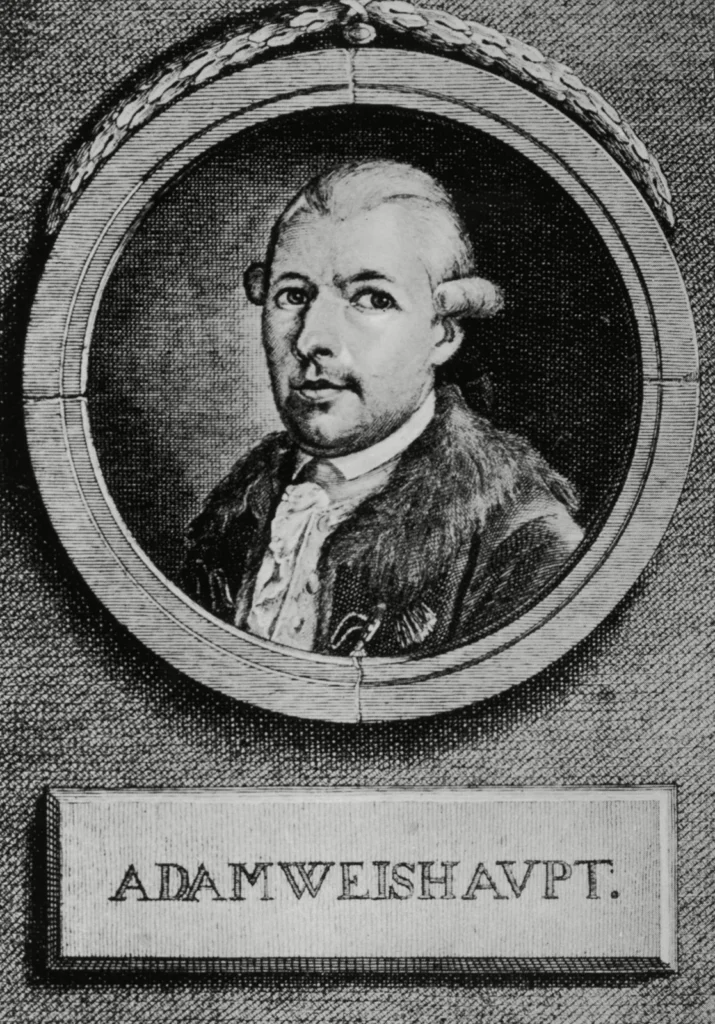
Who Was Adam Weishaupt?
Johann Adam Weishaupt was born on February 6, 1748, in Ingolstadt, Bavaria. After the death of his father at an early age, he received an education that exposed him to philosophy, law and classical literature.
His academic ability eventually led him to the University of Ingolstadt, where he became Professor of Canon Law. During this period, Europe was experiencing significant intellectual change as Enlightenment thinkers encouraged critical reasoning, scientific inquiry and educational reform.
Weishaupt believed that knowledge and disciplined learning could improve both individuals and society. These beliefs later became the foundation upon which he created the Order of the Illuminati.
The Intellectual Climate of the Enlightenment
To understand Adam Weishaupt, it is necessary to understand the Age of Enlightenment. Throughout the eighteenth century, philosophers, scientists and scholars questioned long-held assumptions about politics, education, religion and society.
The Enlightenment encouraged people to seek understanding through observation, education and rational discussion rather than relying entirely on inherited traditions. Universities became centres of intellectual exchange where new ideas circulated across Europe.
These developments strongly influenced Weishaupt’s thinking and eventually inspired the creation of an organization dedicated to intellectual development and structured learning.
Readers interested in the historical background should also explore our guide to the Bavarian Illuminati of 1776, which explains the political and social conditions surrounding the Order’s foundation.
Why Did Adam Weishaupt Create the Illuminati?
Adam Weishaupt believed that education and reason could help people overcome ignorance, prejudice and unnecessary restrictions on independent thought. He envisioned a private organization where carefully selected members could exchange ideas, develop their knowledge and encourage responsible leadership.
His objective was not simply to create another social club. Instead, he wanted a structured order that promoted intellectual discipline, moral improvement and thoughtful discussion among its members.
The organization was established on May 1, 1776, in Ingolstadt under the name “Order of the Illuminati.” The word “Illuminati” comes from the Latin term for those who are enlightened or illuminated through knowledge.
Understanding the historical meaning of the Order helps explain why the organization became one of the most studied examples of an Enlightenment-era private society. Learn more in our article on the meaning of the Illuminati Order.

Adam Weishaupt’s Vision
Weishaupt believed that personal development required education, discipline and continuous learning. Rather than encouraging blind acceptance of ideas, he wanted members to think critically, study philosophy and improve their understanding of society.
He also believed that individuals who developed wisdom and sound judgment could positively influence the communities around them. This emphasis on education distinguished the original Bavarian Illuminati from many later interpretations that focus primarily on secrecy or conspiracy.
While the organization maintained privacy regarding its membership and internal structure, its educational goals reflected many of the broader ideals associated with the European Enlightenment.
How the Illuminati Order Was Organized
One of Adam Weishaupt’s most significant contributions was the organizational structure of the Illuminati. New members did not receive complete knowledge immediately. Instead, they progressed through carefully designed stages of instruction and responsibility.
This hierarchical system allowed experienced members to mentor newer recruits while protecting the internal workings of the Order. Advancement depended on demonstrated commitment, learning and trust rather than public status alone.
Private correspondence, symbolic names and graded membership levels were all used to create an organized and disciplined society. Similar methods were employed by several other private organizations during the eighteenth century.
Readers who want to understand how this structure contributed to the Order’s historical reputation should also read our guide explaining the meaning of a secret society.
The Expansion of the Bavarian Illuminati
Although the Illuminati began with only a small number of members, the organization expanded steadily during its early years. Recruitment focused largely on educated individuals including professors, lawyers, government officials and members of other intellectual circles.
One important figure in the expansion of the Order was Baron Adolph Knigge. His administrative abilities helped organize recruitment, refine internal procedures and extend the society beyond its original base in Bavaria.
As the organization grew, its increasing influence also attracted greater attention from political and religious authorities who viewed private societies with caution. This tension would eventually contribute to the suppression of the Order.
Weishaupt’s reputation cannot be separated from the broader history and modern meaning of the Bavarian Illuminati, which developed long after the original order was suppressed.
Adam Weishaupt and Freemasonry
Modern discussions often connect Adam Weishaupt with Freemasonry. While some members of Masonic lodges later became associated with the Illuminati, the two organizations were not identical.
Freemasonry had already existed for many years before the founding of the Bavarian Illuminati. Weishaupt recognised that existing networks of educated individuals could help expand his organization, leading to some overlap in membership.
However, historians generally distinguish the historical Bavarian Illuminati from Freemasonry itself. Sharing some members or ideas did not make them the same institution.
Knowledge, Light and Enlightenment
Adam Weishaupt frequently used the language of knowledge and enlightenment when describing personal development. Throughout history, light has symbolized learning, understanding and the search for truth.
For Weishaupt, becoming “illuminated” meant developing wisdom through education and disciplined study rather than relying solely on inherited beliefs or assumptions. This symbolic use of light became closely associated with the identity of the Illuminati.
To explore these ideas further, visit our article on Illuminati Light and Higher Knowledge and our guide to Illuminati symbolism and meaning.
Internal Disagreements Within the Illuminati Order
As the Illuminati Order expanded, disagreements developed among its senior members. Growth brought new ideas, personalities and competing opinions about how the organization should be governed.
One of the most important conflicts involved Adam Weishaupt and Baron Adolph Knigge. Knigge had played a major role in expanding the Order, developing its membership system and connecting it with influential intellectual networks. However, the two men eventually disagreed over authority, internal organization and the future direction of the society.
These tensions weakened the Illuminati at a time when external pressure was increasing. Knigge eventually withdrew from the organization, leaving Weishaupt to manage an Order that had become more difficult to control.
The disagreement demonstrates that the historical Illuminati was not a perfectly unified institution. Like many organizations, it experienced leadership disputes, competing ambitions and internal divisions.
Why Authorities Became Suspicious of the Illuminati
The private structure of the Order made Bavarian authorities increasingly suspicious. Members communicated through confidential correspondence, used symbolic names and operated through a system of internal ranks that was not open to public inspection.
Political and religious authorities were concerned that private societies could influence government officials, educators and members of the aristocracy without official supervision. The Illuminati’s interest in Enlightenment reform made the Order appear particularly threatening to institutions that wanted to preserve existing systems of authority.
Government officials also feared that members could place loyalty to the organization above their public responsibilities. Whether every fear was justified or not, secrecy made the Order difficult for outsiders to understand and encouraged suspicion about its objectives.
This relationship between secrecy and public speculation remains central to the broader history of the Illuminati. When an organization limits public access to its internal activity, rumours often expand beyond what available evidence can prove.
The Bavarian Government Bans Secret Societies
During the 1780s, the Bavarian government introduced measures against unauthorized private organizations. These restrictions were directed at secret societies operating outside government and religious supervision.
The Illuminati was among the organizations affected. Government investigations, official prohibitions and the discovery of internal documents placed the Order under increasing pressure.
Authorities searched properties connected with certain members and obtained private correspondence that revealed information about the Illuminati’s membership, internal structure and ambitions. Some of these documents were later published, making previously confidential details available to the public.
By 1785, the Bavarian Illuminati had been effectively suppressed. Its meetings, recruitment system and organized activities could no longer continue openly within Bavaria.
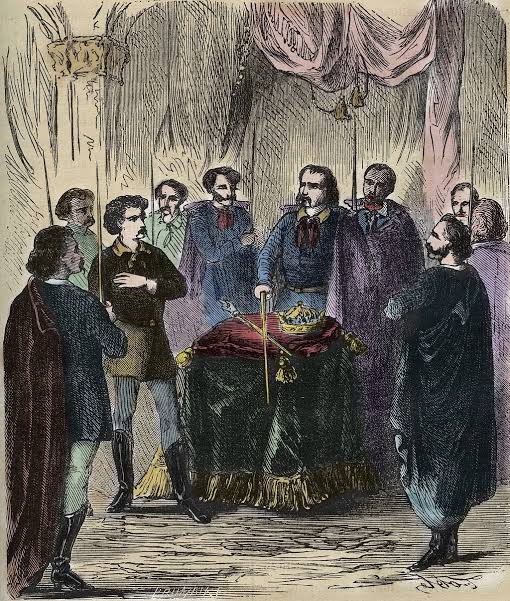
Adam Weishaupt’s Removal From the University
The suppression of the Illuminati had serious consequences for Adam Weishaupt. His association with the Order damaged his academic position, and he eventually lost his professorship at the University of Ingolstadt.
Without the protection of his university position and facing government opposition, Weishaupt left Bavaria. His departure marked the end of his direct leadership of the organization in the place where it had been founded.
The collapse of the Bavarian Illuminati did not occur because of one event alone. Internal disagreements, government investigations, exposed correspondence and political fear all contributed to its decline.
Our complete Bavarian Illuminati 1776 guide examines the Order’s foundation, expansion, structure and suppression in greater historical detail.
Adam Weishaupt’s Exile
After leaving Bavaria, Adam Weishaupt received protection from Ernest II, Duke of Saxe-Gotha-Altenburg. He settled in Gotha, where he continued writing about philosophy, education, morality and the history of the Illuminati.
His exile did not end his intellectual activity. Weishaupt published works defending aspects of his thinking and explaining his interpretation of the organization he had created.
These writings provide important insight into how he wanted the Order to be understood. However, historians must compare Weishaupt’s own explanations with surviving correspondence, government documents and the accounts of other former members.
As the founder, Weishaupt naturally had reasons to defend his intentions. His works are valuable historical sources, but they should be studied alongside independent evidence rather than accepted without examination.
The suppression affected more than Weishaupt’s personal life. Read our complete account of what happened to the Illuminati after 1785 and how the historical Order became a modern legend.
Adam Weishaupt’s Later Life
Weishaupt spent much of his later life in Gotha. Although the Bavarian Illuminati no longer operated publicly in its original form, he continued to study, write and reflect on the ideas that had shaped the Order.
He lived until November 18, 1830. By the time of his death, the Illuminati had already become the subject of political accusations, historical debate and growing speculation.
The organization that had existed for less than a decade had become much larger in public imagination than it had been during its documented period of activity.
Weishaupt’s later years therefore belong to two different histories. The first is the documented life of a former professor and writer living outside Bavaria. The second is the developing legend of the Illuminati as a hidden force supposedly responsible for political change across Europe.
Did Adam Weishaupt Continue the Illuminati in Secret?
There is no widely accepted historical evidence proving that Adam Weishaupt continued to lead the original Bavarian Illuminati as an uninterrupted secret organization after its suppression.
Former members may have remained connected through personal, intellectual or fraternal relationships. Later organizations also adopted the Illuminati name or claimed inspiration from Weishaupt’s ideas. However, continued interest in the name is not the same as verified institutional continuity.
A careful historical approach separates three different possibilities:
- Documented continuation: Evidence that the original organization maintained the same leadership, structure and membership system.
- Informal connections: Former members remaining in contact or participating in other intellectual and fraternal circles.
- Later revival claims: New groups adopting the Illuminati name, philosophy or symbols without proving a direct organizational line.
Understanding these distinctions prevents historical research from becoming confused with unsupported assumptions.
Adam Weishaupt and the French Revolution
After the French Revolution began in 1789, some writers claimed that Adam Weishaupt and the Illuminati had secretly influenced or planned the political upheaval. These accusations became especially popular among authors who feared revolutionary movements and private political organizations.
The Illuminati had promoted Enlightenment ideas and had recruited individuals interested in reform. However, this does not prove that the Order directed the French Revolution or controlled every political development associated with it.
Historical events usually result from numerous social, economic, political and intellectual forces. Explaining a major revolution through one hidden organization may appear simple, but it can ignore the broader conditions that shaped the event.
The accusations nevertheless had a lasting effect. They helped transform Adam Weishaupt from the founder of a suppressed Bavarian society into a central figure in international conspiracy theories.
How Adam Weishaupt Became Part of Modern Conspiracy Culture
Over time, Adam Weishaupt’s name became connected with claims involving hidden political control, banking, entertainment, religion and international institutions. Many of these claims developed long after the historical Bavarian Illuminati had disappeared from documented public activity.
Books, films, music, television and online content frequently present the Illuminati as an all-powerful organization operating across centuries. These portrayals have made the subject more popular, but they do not always distinguish historical evidence from fiction or speculation.
The real Adam Weishaupt was an eighteenth-century professor and Enlightenment thinker who created a private organization in Bavaria. Modern stories often expand his role far beyond what surviving historical records demonstrate.
Visitors can use Illuminati Guide to explore these distinctions through connected articles covering history, symbolism, beliefs, purpose and modern interpretation.
Historical Adam Weishaupt Versus the Legendary Figure
The historical Adam Weishaupt and the legendary Adam Weishaupt are often treated as though they were the same figure. A responsible interpretation should separate them.
The historical Adam Weishaupt was a Bavarian professor, lawyer, writer and founder of the Illuminati Order. He created a private society influenced by Enlightenment ideas, supervised its early development and later lived in exile after the organization was suppressed.
The legendary Adam Weishaupt is portrayed in some modern stories as the architect of a permanent worldwide system of hidden control. These broader claims require evidence beyond the confirmed history of the original organization.
Separating these two portrayals does not make the subject less interesting. Instead, it creates a stronger foundation for understanding how real history evolves into mythology, symbolism and popular culture.
Adam Weishaupt’s Beliefs and Philosophy
Adam Weishaupt’s philosophy placed strong emphasis on education, rational thought, moral development and gradual improvement. He believed that individuals could overcome ignorance by developing knowledge and exercising disciplined judgment.
His thinking was influenced by the Enlightenment belief that society could progress through education and reason. He also believed that carefully trained individuals could influence institutions and help produce wider reform.
However, the private and hierarchical methods he used created tension between his stated commitment to reason and the secrecy of the organization. Critics argued that a hidden system of influence could become manipulative, even when its leaders claimed educational objectives.
This tension remains important when examining Illuminati beliefs and the historical purpose associated with the Illuminati. Ideas about knowledge and improvement must be considered alongside questions about authority, transparency and responsibility.
Was Adam Weishaupt Against Religion?
Adam Weishaupt was critical of religious and political institutions that he believed restricted independent thought. However, descriptions of his views vary, and his relationship with religion should not be reduced to one simple label.
He had been educated in a strongly religious academic environment and was familiar with Catholic theology and canon law. His later thinking was influenced by Enlightenment criticism of institutional authority and by the desire to create an independent intellectual association.
The Illuminati included members with different personal beliefs. Its central historical emphasis was on education, reason and reform rather than the creation of a new public religion.
Modern claims that every Illuminati symbol or belief represents one specific religious position often overlook the complexity of the historical organization and the wider cultural meanings attached to its imagery.
Adam Weishaupt and Illuminati Symbolism
Adam Weishaupt’s Illuminati is frequently associated with the all-seeing eye, pyramid and other symbols popular in modern culture. However, these images were not all created by Weishaupt, and many existed long before the Bavarian Illuminati.
The Owl of Minerva is more closely connected with the historical Order. In classical tradition, the owl represented wisdom, knowledge and thoughtful observation. These meanings aligned with the organization’s emphasis on learning and intellectual development.
The eye, pyramid and light later became strongly connected with the Illuminati through political imagery, literature, entertainment and online interpretation. Their current popularity should not automatically be treated as proof that they were all official symbols of Weishaupt’s original society.
Our Illuminati symbols guide and article about understanding Illuminati symbolism explain the historical origins and modern interpretations of these images.
Adam Weishaupt’s Historical Influence
Adam Weishaupt’s direct organization was short-lived, but his historical influence has been significant. The name Illuminati has survived for more than two centuries and now appears in political discussion, academic research, fiction, music, film and internet culture.
His influence can be understood in several areas:
- Secret-society history: The Bavarian Illuminati remains one of the best-known examples of an Enlightenment-era private organization.
- Political thought: Its history reflects eighteenth-century tensions between reformist ideas and established authority.
- Symbolic culture: The name became associated with illumination, knowledge, secrecy and hidden influence.
- Conspiracy literature: Later writers connected the Order with revolutions, governments and international power.
- Popular entertainment: Modern media transformed the Illuminati into a global cultural symbol.
The importance of Adam Weishaupt is therefore not limited to what the original Order accomplished. His lasting influence also comes from the stories, fears and interpretations that developed after its suppression.
What Can Be Confirmed Historically?
Several central facts about Adam Weishaupt and the Illuminati are supported by established historical records:
- Adam Weishaupt was born in Ingolstadt in 1748.
- He became a professor at the University of Ingolstadt.
- He founded the Order of the Illuminati on May 1, 1776.
- The organization developed a private, hierarchical membership system.
- It expanded through educated and influential social networks.
- Internal disputes weakened the Order.
- Bavarian authorities prohibited secret societies during the 1780s.
- The Illuminati was effectively suppressed by 1785.
- Weishaupt left Bavaria and continued writing in Gotha.
- He died in 1830.
These facts provide a reliable foundation for studying Adam Weishaupt. Claims extending far beyond them should be assessed separately according to the quality of the evidence available.
Historical Evidence Versus Modern Claims
The existence of the Bavarian Illuminati is not a matter of speculation. The organization was real, its founder is known, its internal documents have been studied and its suppression is historically recorded.
What remains disputed are claims that the Order survived unchanged, secretly expanded across the world and now controls governments, industries or major international events.
A balanced approach does not require rejecting every possibility without examination. It requires asking clear questions:
- What primary or reliable historical evidence supports the claim?
- When did the claim first appear?
- Does the source distinguish documented facts from interpretation?
- Can the information be confirmed through independent evidence?
- Is the modern organization genuinely connected to Weishaupt’s Order, or does it simply use the same name?
These questions help readers approach Illuminati history with curiosity while avoiding fear, exaggeration and misinformation.
Our detailed Illuminati myths vs facts guide applies these evidence questions to common claims about Adam Weishaupt, the historical Order, symbols and modern influence.
Why Adam Weishaupt Still Matters Today
Adam Weishaupt remains important because he stands at the intersection of history, philosophy, secrecy and modern mythology. His real organization existed during a period of major intellectual and political change, while his name later became connected with claims extending far beyond eighteenth-century Bavaria.
Studying Weishaupt helps explain how private organizations operate, how governments respond to secrecy and how historical events become transformed by later generations.
His story also demonstrates that knowledge must be approached carefully. Historical research becomes more reliable when documented facts, symbolic interpretation and modern claims are examined separately.
From Historical Research to Modern Illuminati Guidance
Adam Weishaupt’s eighteenth-century organization belongs to the documented history of the Illuminati. Visitors seeking a broader understanding can return to the Illuminati Guide homepage to explore its history, symbols, beliefs, purpose and modern meaning.
Historical membership in the Bavarian Illuminati should not be presented as identical to every modern organization using the Illuminati name. Visitors should examine modern claims carefully, avoid sending money or personal information to unverified individuals and use a clear official communication path when asking questions.
Those seeking information about the modern guidance process can review the Join the Illuminati page. This page explains the website’s membership guidance path and provides the appropriate direction for serious inquiries.
If you would like to learn more or ask a question, please use the Contact page to send a clear inquiry.
Continue Exploring Illuminati History
Adam Weishaupt cannot be fully understood without examining the wider events surrounding the Order he founded. Begin with our complete Illuminati history guide and continue with the detailed history of the Bavarian Illuminati in 1776.
You can also study the meaning of the Illuminati Order, explore our available Illuminati resources and browse the Illuminati Archives for connected historical and educational articles.
Final Understanding
Adam Weishaupt was the founder of the Bavarian Illuminati and one of the most influential figures in the documented history of the Order. Born in Ingolstadt in 1748, he became a university professor and developed an organization inspired by Enlightenment ideas about education, reason and human improvement.
The Illuminati Order grew through a private hierarchy and a network of educated members. Internal disagreements, government suspicion and official investigations contributed to its suppression by 1785. Weishaupt then lived in exile, where he continued writing until his death in 1830.
His historical organization was real, but many claims about an uninterrupted worldwide Illuminati remain unverified. Understanding Adam Weishaupt therefore requires a clear distinction between documented history, later interpretation and modern legend.
For a complete overview, visit Illuminati Guide. Visitors seeking the website’s modern guidance and inquiry process should continue to the Join the Illuminati page.